The genesis of E-RIHS
Since 2001, the European Union has been encouraging collaborative projects in the field of natural heritage research. This means that a large number of universities and laboratories have been working together on the research of movable heritage for years. In practice, the same players have always been involved. The European Union has decided to make funds available one last time for an international collaborative project called IPERION HS Integrated Platform for the European Research Infrastructure, before investing in a permanent infrastructure. The aim is the establishment of a European Research Infrastructure Consortium (ERIC). A number of ERICs are already active in Europe, and E-RIHS has been launched to prepare for the establishment of the ERIC Cultural Heritage in 2024 (E-RIHS-ERIC).
IPERION HS Preliminaries
What projects preceded IPERION HS? The European project LabsTECH (2001-2004) was the initial catalyst for collaboration in cultural heritage research, involving eleven scientific and technological laboratories from eight countries. Within its successor, EU ARTECH (2004-2009), development began on a joint mobile laboratory (MOLAB) and access to advanced research techniques in existing laboratories (FIXLAB). A significant expansion of the network occurred with the subsequent EU project CHARISMA (2009-2014), which included 21 partners from twelve countries. In this project, ARCHlab was developed, allowing researchers to search for information in the archives of participating research institutions. IPERION CH (Cultural Heritage 2015-2018) was launched with this network: the direct predecessor of IPERION HS (Heritage Science).
The aim of IPERION HS (2019-2022) is to concretely shape an international network for science-based heritage research. IPERION HS forms the transition phase towards the final establishment of the international E-RIHS ERIC consortium. 23 countries are collaborating within this project on scientific projects concerning heritage. Furthermore, IPERION HS provides training and unlocks a wide range of scientific instruments, methods, data and tools for heritage research.
IPERION
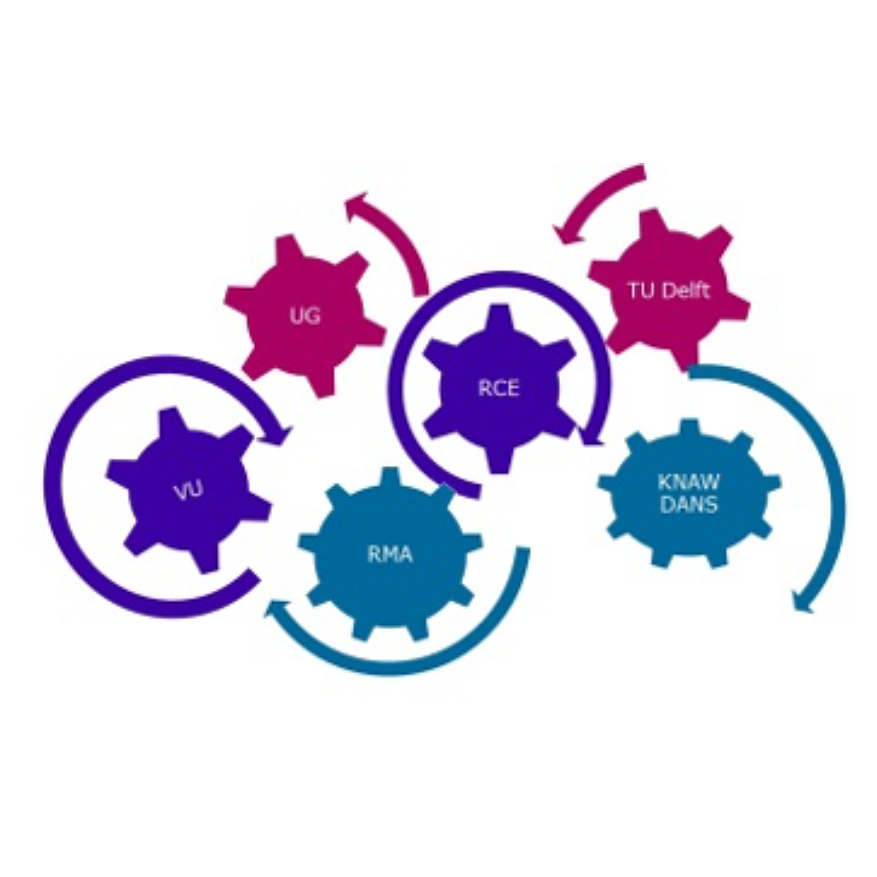
From the first projects where European cooperation between research laboratories and cultural heritage knowledge institutions was pursued, the Institute Collectie Nederland was involved, now part of the RCE. For IPERION HS in the Netherlands, the RCE is the main contractor for the project and is collaborating on this with the Rijksmuseum, University of Groningen, Delft University of Technology, Vrije Universiteit, and KNAW DANS.
IPERION HS SPEARHEADS
The activities in IPERION HS relate to three interlinked areas: international access to scientific facilities, joint research, and networking. The project has eight main objectives.
1 outline basic structure of the collaboration where steering, decision-making, and financial and quality management take place. This is done via a Governing Board, Steering Committee, project coordinators, and various advisory bodies.
2 Further development of ARCHLAB, with the aim of providing international access to archives and data from previous studies and research.
3 Further development of FIXLAB, making the most advanced laboratory techniques and physical locations accessible.
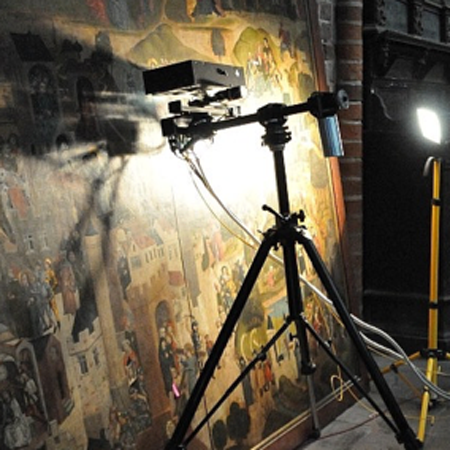
4 Further development of MOLAB, which enables non-invasive measurements and research to be carried out on cultural heritage objects, collections, buildings and sites using a collection of mobile instruments.
5 coordination of all joint scientific activities. The activities are primarily focused on improving the scientific and technical quality of research, methodology development, and cost-effective data management (such as innovative methods for connecting archaeological datasets).
6 increasing the innovative impact of project and research results from spearhead E. Among other things, there will be a guide on exploiting, sharing, and exchanging knowledge, instruments, and data for the future E-RIHS / ERIC.
7 stimulating participation in E-RIHS / ERIC by offering user training and fostering interaction via a user forum. This will develop expertise and give users a voice in the realisation of IPERION HS. The connection between the different heritage domains will also be made here.
8 A framework for a central portal where international applications for ARCHLAB, FIXLAB, and MOLAB are synchronised. It is also the IPERION HS office for training, communication, and operational management. This is where relations will also be established with other European initiatives and networks.
For more information on the projects that preceded IPERION HS, see links.